



- Your cart is empty Browse Shop
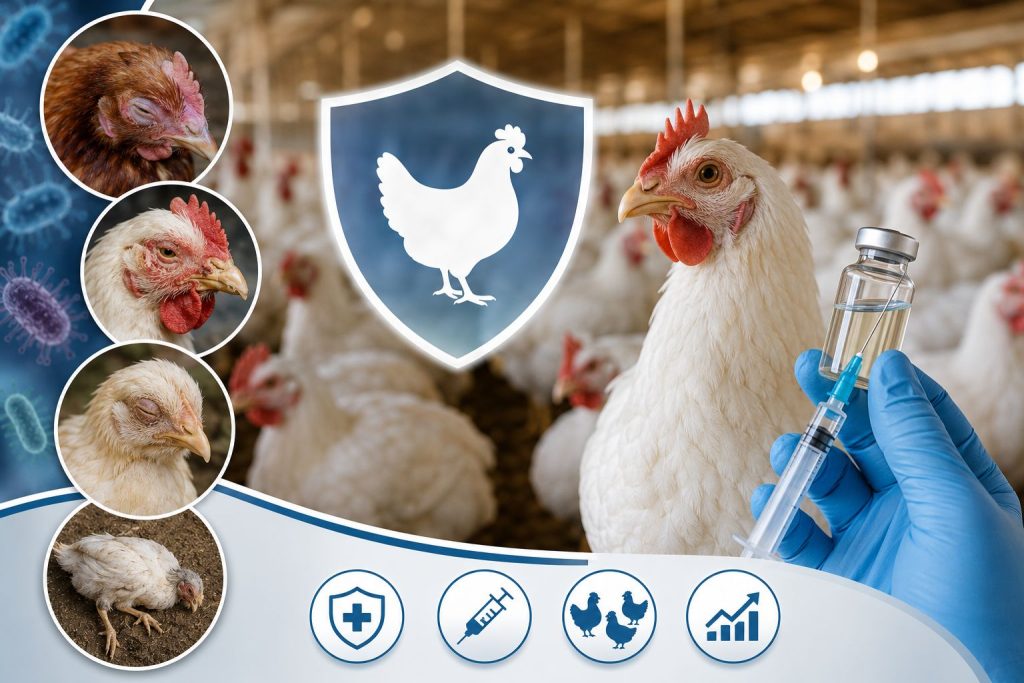
Poultry farming is one of the fastest-growing agricultural sectors in Africa, providing millions of households with income, employment, and a reliable source of protein. However, poultry production is highly vulnerable to infectious diseases that can spread rapidly through a flock, causing high mortality, reduced egg production, slower growth, and significant financial losses.
Fortunately, many of the most devastating poultry diseases are preventable through proper vaccination, good nutrition, and strong farm biosecurity. Vaccination prepares birds’ immune systems to recognize and fight disease-causing organisms before they cause severe illness.
At Davetis Enterprises Limited, we supply quality veterinary vaccines and animal health solutions that help poultry farmers protect their flocks and improve farm productivity. In this guide, we explore five of the most common poultry diseases and explain how vaccination helps safeguard your birds.
Why Poultry Vaccination Matters
Vaccination is one of the most cost-effective investments a poultry farmer can make. A well-planned vaccination program offers several benefits:
- Prevents major disease outbreaks.
- Reduces mortality rates.
- Improves egg production.
- Promotes healthy growth and weight gain.
- Lowers treatment costs.
- Enhances flock immunity.
- Improves farm profitability.
- Supports sustainable poultry production.
Vaccination should always be combined with proper nutrition, clean housing, and effective biosecurity measures.
1. Newcastle Disease (ND)
What is Newcastle Disease?
Newcastle Disease is one of the most contagious viral diseases affecting poultry worldwide. It spreads quickly through direct contact with infected birds, contaminated feed, water, equipment, and even clothing.
Without vaccination, an outbreak can wipe out an entire flock within days.
Symptoms
Common signs include:
- Sudden death
- Sneezing and coughing
- Nasal discharge
- Difficulty breathing
- Twisted neck (torticollis)
- Paralysis
- Greenish diarrhea
- Sharp decline in egg production
- Soft-shelled eggs
Economic Impact
Newcastle Disease can cause:
- Up to 100% mortality in susceptible flocks.
- Loss of egg production.
- Poor growth.
- Trade restrictions.
- Significant financial losses.
Prevention
Protect your flock by:
- Vaccinating according to schedule.
- Restricting farm visitors.
- Isolating new birds.
- Cleaning and disinfecting poultry houses.
- Controlling wild bird access.
Recommended Vaccination Schedule (Example)
| Bird Age | Vaccine |
|---|---|
| Day 7 | First Newcastle vaccine |
| Week 3–4 | Booster |
| Week 8 | Booster |
| Every 2–3 months (layers/breeders) | Revaccination as advised by a veterinarian |
Schedules may vary depending on vaccine type, production system, and local disease risks. Always follow your veterinarian’s guidance and the vaccine manufacturer’s instructions.
2. Gumboro Disease (Infectious Bursal Disease)
What is Gumboro Disease?
Gumboro Disease primarily affects young chickens by attacking the bursa of Fabricius, an organ responsible for developing the immune system.
Birds with Gumboro often become immunosuppressed, making them vulnerable to many other diseases.
Symptoms
Signs include:
- Depression
- Loss of appetite
- White watery diarrhea
- Ruffled feathers
- Trembling
- Dehydration
- Sudden deaths
Why It Is Dangerous
Even birds that survive may have weakened immunity, reducing the effectiveness of future vaccinations and increasing susceptibility to infections.
Prevention
- Vaccinate chicks.
- Maintain strict hygiene.
- Keep litter dry.
- Limit visitor access.
- Purchase chicks from reputable hatcheries.
Recommended Vaccination Schedule (Example)
| Bird Age | Vaccine |
|---|---|
| Day 10–14 | First Gumboro vaccine |
| Day 18–24 | Booster if recommended |
The exact timing depends on maternal antibody levels and should be determined with veterinary advice.
3. Marek’s Disease
What is Marek’s Disease?
Marek’s Disease is a viral disease that causes tumors, paralysis, and immunosuppression. The virus spreads through feather dust and can survive in poultry houses for extended periods.
Symptoms
Affected birds may show:
- Paralysis of legs or wings
- Weight loss
- Blindness
- Irregular pupils
- Poor growth
- Sudden death
Why Vaccination Is Critical
There is no cure for Marek’s Disease.
Vaccination is the only reliable method of protection and must be given before chicks are exposed to the virus.
Recommended Vaccination Schedule (Example)
| Bird Age | Vaccine |
|---|---|
| Day-old chicks | Marek’s vaccine (usually administered at the hatchery) |
Good hygiene and cleaning help reduce environmental exposure but do not replace vaccination.
4. Infectious Bronchitis (IB)
What is Infectious Bronchitis?
Infectious Bronchitis is a highly contagious viral respiratory disease that affects chickens of all ages.
It spreads rapidly through the air and contaminated equipment.
Symptoms
Common signs include:
- Sneezing
- Coughing
- Nasal discharge
- Gasping
- Watery eyes
- Reduced feed intake
- Sharp drop in egg production
- Misshapen or soft-shelled eggs
Economic Impact
The disease reduces:
- Egg production
- Egg quality
- Growth performance
- Feed efficiency
Prevention
- Vaccination.
- Good ventilation.
- Clean drinking water.
- Biosecurity.
- Isolation of sick birds.
Recommended Vaccination Schedule (Example)
| Bird Age | Vaccine |
|---|---|
| Day-old chicks | First vaccination |
| Week 2–3 | Booster |
| Layers | Additional boosters before laying and during production if advised |
5. Fowl Pox
What is Fowl Pox?
Fowl Pox is a viral disease transmitted through mosquito bites and direct contact with infected birds or contaminated equipment.
It occurs in two forms:
- Dry (cutaneous)
- Wet (diphtheritic)
Symptoms
Dry Form
- Wart-like lesions on:
- Comb
- Wattles
- Eyelids
- Legs
Wet Form
- Yellow plaques inside the mouth and throat.
- Difficulty swallowing.
- Difficulty breathing.
Prevention
- Vaccination.
- Mosquito control.
- Farm sanitation.
- Isolation of infected birds.
Recommended Vaccination Schedule (Example)
| Bird Age | Vaccine |
|---|---|
| Week 6–10 | Fowl Pox vaccine (wing-web method) |
One vaccination is often sufficient for many flocks, though local veterinary advice should be followed.
Sample Poultry Vaccination Program
The following is a general example for commercial poultry. Vaccine types and timing vary by region, disease pressure, maternal antibodies, and production goals. Farmers should always work with a veterinarian or poultry specialist to develop an appropriate program.
| Bird Age | Disease |
|---|---|
| Day-old | Marek’s Disease, Infectious Bronchitis |
| Day 7 | Newcastle Disease |
| Day 10–14 | Gumboro Disease |
| Day 18–24 | Gumboro Booster (if recommended) |
| Week 3–4 | Newcastle Booster |
| Week 6–10 | Fowl Pox |
| Week 8 | Newcastle Booster |
| Before laying | Infectious Bronchitis Booster (where recommended) |
| During production | Routine Newcastle boosters as advised |
Biosecurity Supports Vaccination
Vaccination alone cannot eliminate disease risks.
Farmers should also implement strong biosecurity measures:
- Restrict farm visitors.
- Quarantine new birds.
- Clean and disinfect poultry houses regularly.
- Provide clean drinking water.
- Control rodents and wild birds.
- Dispose of dead birds safely.
- Sanitize equipment.
- Use clean footwear and protective clothing.
Healthy birds respond better to vaccination and are less likely to suffer severe disease.
Signs Your Vaccination Program Needs Review
Consult a veterinarian if you notice:
- Frequent disease outbreaks.
- High mortality after vaccination.
- Declining egg production.
- Uneven flock growth.
- Poor vaccine handling or storage.
- Incorrect administration methods.
Vaccines must be stored and transported under recommended cold-chain conditions to remain effective.
Common Vaccination Mistakes to Avoid
Avoid these common errors:
- Using expired vaccines.
- Breaking the cold chain during transport or storage.
- Vaccinating sick or severely stressed birds.
- Mixing vaccines incorrectly.
- Using contaminated equipment.
- Missing booster doses.
- Ignoring the manufacturer’s instructions.
- Assuming vaccination alone replaces good management and biosecurity.
How Davetis Enterprises Limited Supports Poultry Farmers
At Davetis Enterprises Limited, we understand that healthy poultry are the foundation of profitable farming. We supply high-quality veterinary vaccines, pharmaceuticals, nutritional products, disinfectants, and animal health solutions sourced from reputable manufacturers.
Serving farmers, veterinarians, agrovets, and institutions across Kenya, Uganda, and Tanzania, we are committed to helping our customers protect their flocks through reliable products, timely distribution, and professional support.
Conclusion
Preventing disease is far more effective and affordable than treating outbreaks after they occur. Newcastle Disease, Gumboro, Marek’s Disease, Infectious Bronchitis, and Fowl Pox remain among the most significant threats to poultry production, but they can be effectively managed with a well-planned vaccination program and strong biosecurity practices.
Every poultry farm is unique, so vaccination schedules should be tailored to the type of birds, local disease risks, and veterinary recommendations. By investing in quality vaccines, maintaining proper flock management, and working with trusted veterinary suppliers, farmers can raise healthier birds, improve productivity, and build more profitable poultry enterprises.
Contact Davetis Enterprises Limited
Looking for reliable poultry vaccines and animal health solutions?
Davetis Enterprises Limited is your trusted partner for quality veterinary vaccines, pharmaceuticals, nutritional products, and poultry health solutions. Our experienced team is ready to help you protect your flock and support your farming success across East Africa.