



- Your cart is empty Browse Shop
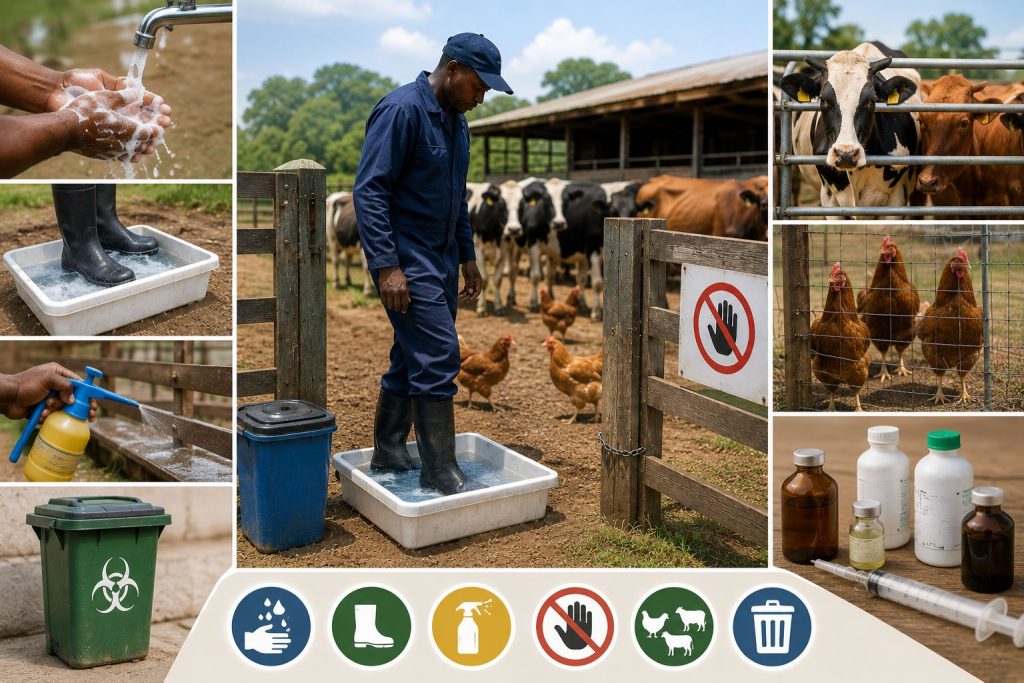
Disease outbreaks remain one of the greatest threats to livestock farming worldwide. Whether you keep poultry, dairy cattle, beef cattle, goats, sheep, pigs, or other livestock, infectious diseases can spread rapidly, resulting in reduced productivity, increased treatment costs, and significant financial losses.
The good news is that many diseases can be prevented through effective biosecurity practices.
Biosecurity refers to the measures taken to prevent the introduction and spread of infectious diseases on a farm. Rather than relying solely on treatment after animals become sick, biosecurity focuses on prevention, creating a healthier environment where animals thrive and businesses remain profitable.
At Davetis Enterprises Limited, we believe that prevention is the foundation of successful livestock production. This guide explores the essential biosecurity practices every livestock farmer should implement.
What Is Biosecurity?
Biosecurity is a set of management practices designed to reduce the risk of diseases entering or spreading within a livestock operation.
These practices protect:
- Animals
- Farmers and farm workers
- Consumers
- Farm profitability
- The environment
- The wider livestock industry
Strong biosecurity is essential for both smallholder and commercial farms.
Why Biosecurity Is Important
Disease outbreaks can have devastating consequences.
Poor biosecurity can lead to:
- High animal mortality
- Reduced milk production
- Lower egg production
- Poor weight gain
- Increased veterinary costs
- Expensive disease control measures
- Market restrictions
- Loss of customer confidence
Good biosecurity helps farmers:
- Prevent disease outbreaks.
- Improve livestock productivity.
- Reduce medication costs.
- Improve animal welfare.
- Increase profitability.
- Protect neighboring farms.
1. Farm Access Control
One of the simplest yet most effective biosecurity measures is controlling who and what enters your farm.
Many livestock diseases are introduced through:
- Visitors
- Vehicles
- Equipment
- New animals
- Delivery personnel
Best Practices
Restrict unnecessary access to the farm.
Install clear signs such as:
- Authorized Personnel Only
- Biosecurity Area
- No Unauthorized Entry
Maintain a single controlled entrance whenever possible.
Lock gates when not in use.
Keep a visitor log that records:
- Name
- Contact information
- Date of visit
- Purpose of visit
- Previous farms visited
This information can be invaluable during disease investigations.
Vehicle Control
Vehicles can transport disease-causing organisms through mud, manure, and contaminated tires.
Implement the following:
- Limit vehicle access.
- Designate parking areas outside animal housing.
- Clean and disinfect delivery vehicles when necessary.
- Avoid sharing transport vehicles between farms without proper sanitation.
2. Isolation of Sick Animals
One sick animal can infect an entire herd or flock within a short period.
Immediate isolation is essential.
Signs That Require Isolation
Watch for animals showing:
- Fever
- Loss of appetite
- Diarrhea
- Coughing
- Nasal discharge
- Lameness
- Skin lesions
- Reduced milk production
- Sudden weakness
Do not wait for laboratory confirmation before separating visibly sick animals.
Quarantine Procedures
Create a designated isolation area away from healthy animals.
The isolation facility should:
- Have separate feeding equipment.
- Be easy to clean.
- Prevent contact with healthy livestock.
- Have dedicated caretakers where possible.
Animals should only return to the herd after complete recovery and veterinary clearance.
Quarantine New Animals
Newly purchased livestock may appear healthy while carrying infectious diseases.
Always quarantine new animals before mixing them with existing stock.
During quarantine:
- Observe for signs of illness.
- Vaccinate if necessary.
- Deworm when appropriate.
- Conduct veterinary examinations.
A quarantine period of at least two to four weeks is often recommended, depending on veterinary guidance and the disease risks in your area.
3. Cleaning and Disinfection
Cleaning removes dirt, manure, and organic matter, while disinfection destroys harmful microorganisms.
Both steps are necessary for effective disease prevention.
Daily Cleaning
Farm buildings should be cleaned regularly.
This includes:
- Removing manure
- Replacing bedding
- Cleaning feed troughs
- Washing water containers
- Clearing spilled feed
A clean environment discourages disease-causing organisms.
Effective Disinfection
After cleaning, apply an appropriate disinfectant to:
- Animal housing
- Feeding areas
- Walkways
- Loading ramps
- Isolation units
Always follow the manufacturer’s instructions regarding:
- Concentration
- Contact time
- Safety precautions
Organic material reduces disinfectant effectiveness, so surfaces should be cleaned before disinfection.
Water Hygiene
Contaminated water spreads many diseases.
Ensure:
- Water tanks are cleaned regularly.
- Drinking troughs are disinfected.
- Water sources remain protected from contamination.
- Water quality is monitored where possible.
Waste Management
Improper disposal of waste attracts pests and spreads disease.
Dispose of:
- Dead animals
- Used needles
- Contaminated bedding
- Animal waste
according to local veterinary and environmental regulations.
Carcasses should never be left exposed where scavengers can spread disease.
4. Equipment Sanitation
Farm equipment frequently moves between animals and can become a major source of disease transmission.
Shared equipment should always be cleaned and disinfected after use.
Equipment includes:
- Syringes
- Feed buckets
- Water containers
- Milking equipment
- Hoof trimming tools
- Surgical instruments
- Restraining equipment
Whenever possible, assign equipment to specific animal groups.
Needle and Syringe Safety
Never reuse disposable needles across multiple animals unless advised under specific veterinary protocols.
Using contaminated needles can spread diseases through blood.
Always:
- Use sterile equipment.
- Dispose of sharps safely.
- Follow veterinary recommendations.
Milking Equipment Hygiene
Poorly maintained milking equipment contributes to diseases such as mastitis.
Regularly:
- Wash equipment after every milking.
- Sanitize pipelines.
- Replace worn rubber parts.
- Inspect equipment for damage.
Clean equipment improves milk quality and animal health.
5. Visitor Management
Visitors can unknowingly introduce disease-causing organisms onto your farm.
Visitors include:
- Veterinarians
- Feed suppliers
- Equipment technicians
- Buyers
- Contractors
- Friends and relatives
While some visits are necessary, they should be managed carefully.
Visitor Biosecurity Rules
Require visitors to:
- Sign a visitor register.
- Wear clean protective clothing.
- Use disinfectant footbaths.
- Wash or sanitize hands before entering animal areas.
- Avoid direct animal contact unless necessary.
Visitors who recently visited another livestock farm should inform farm management before entry.
Protective Clothing
Provide visitors with:
- Disposable boots or boot covers
- Coveralls
- Gloves
- Hair covers where necessary
Protective clothing reduces the risk of introducing pathogens.
Pest and Wildlife Control
Rodents, birds, insects, and wild animals can carry diseases onto farms.
Implement a pest control program that includes:
- Rodent bait stations
- Insect control
- Secure feed storage
- Repairing holes in buildings
- Removing standing water
- Keeping grass short around facilities
Reducing wildlife access minimizes disease risks.
Employee Training
Employees play a critical role in maintaining farm biosecurity.
Regular training should cover:
- Disease recognition
- Personal hygiene
- Equipment cleaning
- Animal handling
- Emergency reporting
- Proper use of disinfectants
A well-trained team is often the first line of defense against disease outbreaks.
Develop a Farm Biosecurity Plan
Every livestock operation should have a written biosecurity plan.
The plan should include:
- Visitor policies
- Cleaning schedules
- Vaccination programs
- Disease reporting procedures
- Quarantine guidelines
- Pest control measures
- Waste disposal procedures
- Emergency contacts
Review and update the plan regularly as your farm grows or disease risks change.
Common Biosecurity Mistakes Farmers Should Avoid
Avoid these common mistakes:
- Allowing unrestricted farm access.
- Mixing new animals with existing stock immediately.
- Ignoring sick animals.
- Reusing contaminated equipment.
- Skipping routine cleaning.
- Sharing farm tools with neighboring farms without disinfection.
- Allowing visitors into animal housing without protective clothing.
- Delaying veterinary consultation.
- Failing to vaccinate livestock.
- Poor record keeping.
Even one oversight can introduce disease to an otherwise healthy farm.
How Davetis Enterprises Limited Supports Farm Biosecurity
At Davetis Enterprises Limited, we understand that prevention is the cornerstone of profitable livestock farming. We supply high-quality veterinary vaccines, pharmaceuticals, disinfectants, laboratory supplies, diagnostic solutions, and animal health products sourced from trusted manufacturers.
Serving customers across Kenya, Uganda, and Tanzania, we are committed to helping farmers, veterinary professionals, and institutions strengthen their biosecurity programs with reliable products and expert support.
Conclusion
Biosecurity is not a one-time activity but a continuous commitment to protecting animal health and farm productivity. By controlling farm access, isolating sick animals, maintaining strict cleaning and disinfection routines, sanitizing equipment, and managing visitors responsibly, farmers can significantly reduce the risk of disease outbreaks.
A strong biosecurity program not only safeguards livestock but also improves profitability, protects food safety, and supports sustainable agriculture. Investing in preventive measures today is far less costly than dealing with a major disease outbreak tomorrow.
Contact Davetis Enterprises Limited
Looking to strengthen your farm’s biosecurity with trusted veterinary products and expert support?
Davetis Enterprises Limited offers a comprehensive range of veterinary vaccines, disinfectants, diagnostic supplies, pharmaceuticals, and animal health solutions to help you maintain healthy livestock and productive farms across East Africa.
Protect your animals today—because prevention is always better than cure.